
“Poor. Neglected. Ignored.” These three words sum up how one resident describes the air quality of Camden City.
Camden, New Jersey, has long faced the consequences of industrial zoning, major roadways, and lasting pollution. This unfortunate mix has made poor air quality a persistent issue. Residents have watched these pollutant sources accumulate over the years and continue to feel the lasting effects on their health and environment.
While most residents understand that pollution is harmful, not everyone knows exactly what these health hazards are or what they mean for their long-term well-being. On top of that, it is difficult for residents to fight back against air pollution when there is such a dense concentration of it throughout the area.
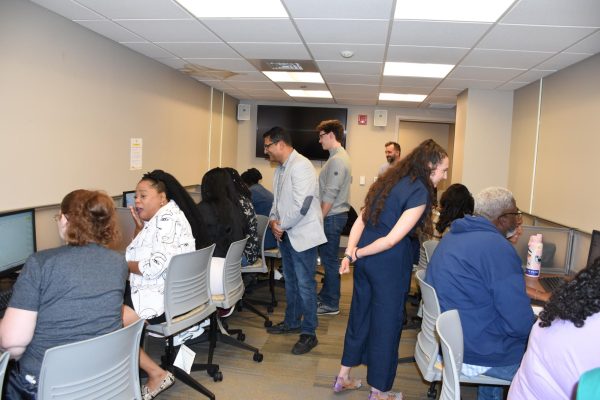
Rowan University’s Community Planning + Visualization Lab is no stranger to Camden and its people. Since 2017, the lab has worked on projects focused on air quality and improving community health across the city.
Over the summer of 2025, the Community Planning + Geovisualization Lab, in collaboration with Camden Community Partnership and Rowan University Green Jobs Academy, led a participatory science project centered on air quality. The project exclusively invited Camden residents and those who work in the city to take part.
Through in-person, hands-on workshops held at the Camden County Historical Society, Camden County Municipal Utilities Authority, Camden Community Partnership, and Cooper Medical School Library, 40 participants learned how to gather air quality data in their everyday lives, tracking the air they were breathing in real time. Each participant received an air quality monitoring device, and the data collection process lasted one to two weeks.
But gathering air quality data was only part of the experience. Participants also gained valuable knowledge through five educational workshops about environmental problems and solutions, covering topics such as the benefits of green space, climate standards, environmental education in schools, and air quality awareness.
“I’m passionate about Camden and its rebirth into a dynamic city! We (residents) deserve clean air and a beautiful place to live too!” said one participant before the data collection began.
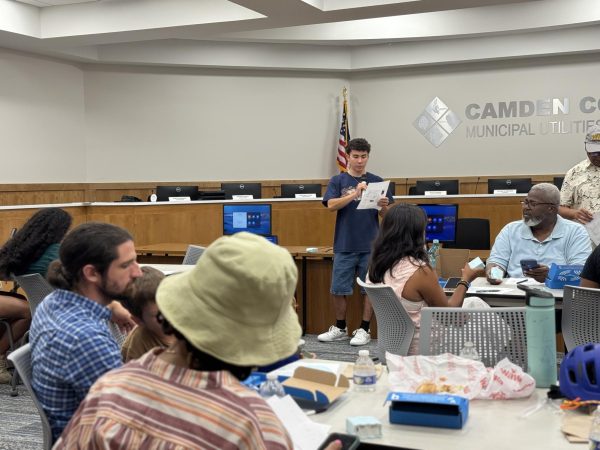
The program gave participants not only the opportunity to learn about local environmental hazards but also to contribute meaningful data toward understanding Camden’s air quality.
One participant reflected on the importance of education, saying, “I think education from all levels—children, teens, and adults—really is helpful for understanding and internalizing the information and then moving into action and stuff too.”
After the data collection process concluded, participants gathered for a mapping workshop at Rowan University’s Camden campus, where the project team presented a map of the air quality data collected throughout the summer.
At the event, participants received Certificates of Completion and a $100 gift card as recognition for their involvement. Many also shared ideas and hopes for Camden’s environmental future.
“More trees. The more the merrier,” suggested one participant. “More regulations on industrial emissions,” added another. Others proposed more “green” transportation options and stronger enforcement of environmental rules and regulations.
Through the power of participatory science, residents were left with the tools and knowledge to better understand the air quality around them, while the Community Planning + Visualization Lab gained valuable data to inform future research aimed at improving Camden City’s environment.
Ethan Theurer is a student in Rowan University’s Community and Environmental Planning program and a research assistant in Dr. Mahbubur Meenar’s Planning + Visualization Lab. This participatory science project was partially funded through the TD Bank–sponsored Green Jobs Academy project and an environmental education grant from the U.S. EPA awarded to Rowan University.