
There are new types of businesses sprouting up in South Jersey, called refilleries, where shoppers can bring or be provided with clean containers to re-fill and stock up on necessities, using a pay-by-weight method. Refilleries are a store often filled with detergent, hand soap, lotion, personal care products, and dry goods. All with the purpose of promoting zero-waste.
While refilleries may seem like a new way of shopping for some, using clean containers to stock up on items is not a new concept.
It is similar to the concept known as the closed-loop system, where empty containers are given to a supplier to be cleaned and refilled. Re-filling containers used to be a common way of avoiding waste before corporate retail chains began to package items in plastic beginning in the mid-20th-century. Refilleries, in turn, want to combat this issue.
Refilleries began to emerge more frequently in 2010 with the global push to reduce single-use plastic.
Tina Solak, the owner of The Refill Market in Haddon Township, considers herself a “life long environmentalist.” She opened her refillery with the goal to bring sustainable shopping to her community.
“There’s so much plastic, and we know a small percentage of it actually gets recycled,” said Solak. “So, it can be overwhelming with all the choices that you have when you walk into a store like mine. We encourage people to make one small change at a time.”
For first-time shoppers, shifting to a low-waste alternative is the start of the impact that refilleries are hoping to make.
New Jersey has already made efforts to reduce plastic waste. The state has implemented a ban on plastic bags in 2022, along with the new “Skip the Stuff” law that will take effect in August 2026.
However, many of the products sold in stores still use plastic to package food and household items. South Jersey stores like Solak’s are building on a national trend to create a communal change through refilleries.
During the pandemic, Jacki D’Amato made a conscious decision to reduce her family’s consumer waste, but realized it was a challenge.
“I was working on transitioning my own family to being as zero waste as possible,” said D’Amato. “And in the process, I realized how difficult it was for people to not only find products in stores near them, but also quality products.”
As a result, she started her own refillery as a “lifestyle store” called Good Deeds Market in Cape May, so individuals had a space to live more mindfully.
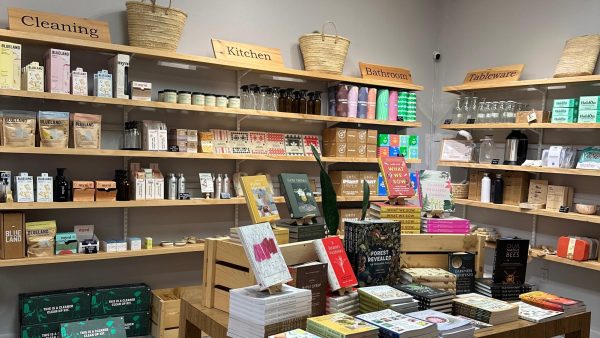
Since companies typically sell their items in plastic, refillery owners like D’Amato and Solak spend a lot of time researching suppliers that provide eco-friendly, plastic-free packaging.
As a result, refilleries typically partner with companies that have similar values as they do. When it comes to sustainability, communicating the principles of your shop and the products you carry is a crucial step for breakthrough in these partnerships.
“If there’s a partner that has a sustainable product but they typically ship in styrofoam or plastic, opening that communication and asking them to make changes can actually go a long way,” D’Amato said. “And then, of course, trying the products yourself to make sure that they’re of good quality.”
Conversations like these are inspiring more and more suppliers to make sustainable changes. D’Amato goes a step further with Good Deeds’ sustainability mission by holding community environmental projects like beach clean-ups. The market also has a running promotion: for every item they sell those proceeds go to planting a tree.
At Love Thy Nature Refillery in Medford, owner Dana Jeffas aims to reduce single-use plastic by encouraging sustainability practices and wellness.
“In just two years, we’ve saved over 12,000 containers from going to landfill,” Jeffas said. “How we track that is by the number of people refilling — and not just by the number of people, but the number of products they’re refilling on an everyday basis.”
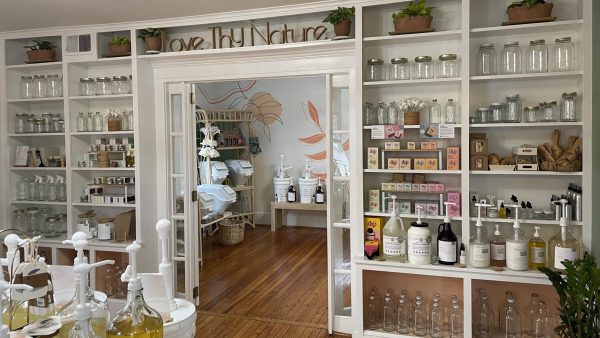
Jeffas opened her store in March 2024 after becoming more aware of waste from single-use packages in the beauty industry and learning more about health. Her shop offers a boutique-style experience with a large assortment of cleaning supplies.
These South Jersey refilleries want to provide a shopping alternative to provide and educate their shoppers on mindful consumerism. The individual decision to make the shift from single-use plastic to reusable containers is influencing communities and contributes to a larger impact of a zero waste-lifestyle.
“It draws the environmental crowd in for sure,” Jeffas says. “But it also draws the people that maybe aren’t thinking of the environment first; they’re thinking of, you know, cleaner products first. Then the benefit is the environment at the end of the day.”