
This story was originally published by NJ Spotlight News through the NJ News Commons.
President Trump is squarely within the law to deny a state or tribal nation’s request for disaster relief for any reason, including political animus, according to a former chief of the country’s disaster response agency.
Federal law gives the president wide “discretion” to reject or approve disaster assistance, said Craig Fugate, who was the administrator of the Federal Emergency Management Agency during the Obama administration.
“Unfortunately, the law gives the discretion to the president,” Fugate said Wednesday at a House Transportation and Infrastructure Committee hearing.
“Nobody ever anticipated you’d weaponize disaster declarations but the law says ‘the discretion of the president,’” Fugate told Laura Friedman, a California Democrat who asked about wildfire relief. Congress could narrow the law if it wanted, Fugate said. “When you have discretion, it can be used for good and bad, for things you don’t agree with.”
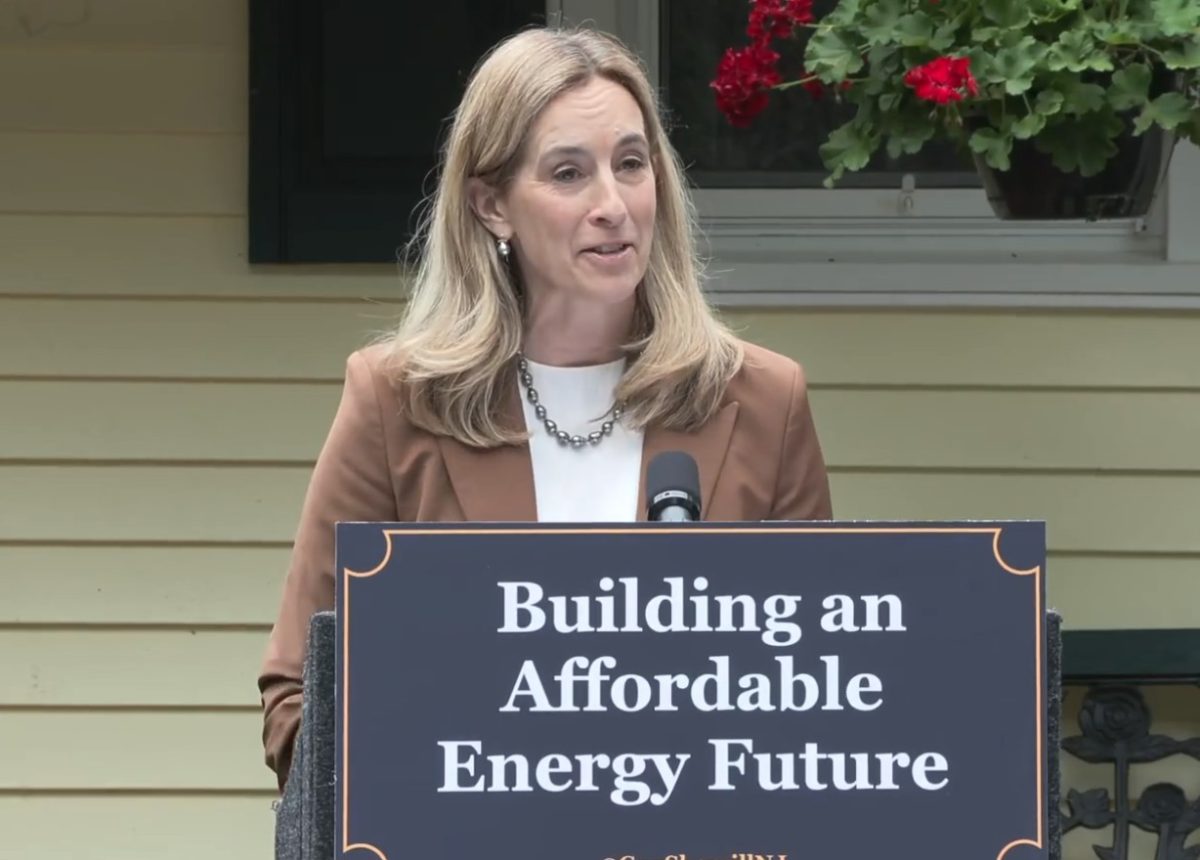
Trump this month denied $227 million in requests from four Democratic-led states, including New Jersey, which sought $84 million in help from the U.S. government related to a February cold wave that cut electrical power and damaged crops, particularly in South Jersey. The administration of Gov. Mikie Sherrill, a Democrat, is appealing the denial.
“We’ve all seen Donald Trump weaponize the presidency for political retribution,” Sen. Andy Kim (D-NJ), who sits on the Senate committee that oversees FEMA, said in a statement to NJ Spotlight News. “If there is a reason other than politics for him and his administration to withhold FEMA assistance, we need an explanation immediately.”
HUD as ‘hostage’
Disaster response at FEMA in recent years has emerged as a swirling subject of political bickering and partisan backbiting.
The Trump administration held back about $20 billion in relief after Hurricanes Irma and Maria hit Puerto Rico in 2017. Then political staff within the administration obstructed an inspector general investigation. The inquiry found that demands placed on Housing and Urban Development by the White House budget office led to lengthy delays.
It felt as though HUD, which worked with FEMA to rebuild after the storms, were being held “hostage,” with demands, in particular from Russell Vought, investigators found. (Vought is head of the White House budget office in the second Trump administration.)
“These demands they were putting on us … had never been done,” Brian Montgomery, HUD deputy secretary during the period, told investigators. “It slowed down the flow, the process to get the notice out.”
In the Biden presidency, Republicans accused FEMA of politicizing the response to Hurricane Helene, in particular in western North Carolina, which leans Republican. Chuck Edwards, now a second-term Republican who represents the area in the House, said the emergency agency was slow.
“I don’t believe that it’s because it’s political,” Edwards told National Public Radio in 2024. “I think it’s because it is a very complex and inefficient bureaucracy from the very top that has caused this problem. We just happened to be in a Republican district.”
One NJ Republican
In his second term, Trump has approved 89% of disaster aid requests from Republican governors, and 23% of Democratic-led states, according to a memo compiled by Democrats on the House committee.
Trump has denied about 30% of requests in his second term, double the presidential average from 2000-2024, according to data compiled by Andrew Rumbach, a researcher at the nonpartisan Urban Institute. And Trump in his second term has been slower to render denials or approvals, taking an average 70.4 days, compared with his predecessors’ 22.2 days.
Rep. Jeff Van Drew (R-2nd) was the state’s lone Republican, among three, to sign on to an April 20 letter to the president requesting approval of a disaster declaration. Van Drew, who represents significant farmland, said the February freeze varied in its damage.
“They did lose some, but they seem to be OK,” he said. “Depends where you are. It’s very geographic.”
In most disaster declarations, the U.S. government, through FEMA, covers 75% of costs minimum, though the president can increase that number.
No Jersey peaches
“I’m not surprised the president has once again ignored the plight of average people — farmers, in this case,” Rep. Herb Conaway (D-3rd) said in an interview with NJ Spotlight News.
“In our case it was unusually cold, in fact a subzero shock, to a lot of the agricultural crops in the district,” Conaway said. “A lot of those budding fruits were destroyed. We lost just about the entirety of the peach crop. We lost about 30 percent of blueberries, and other crops.”
The disaster aid denial forces taxpayers to shoulder the cleanup costs with an added penalty, said Rep. Nellie Pou (D-9th), who like Van Drew is a member of House Transportation and Infrastructure — with jurisdiction over FEMA.
“The taxpayers are being affected twice. Twice because their local taxes will have to be diverted to a winter storm that clearly will become the responsibility of the local government,” she said. “And for FEMA to ‘provide’ the services that they’re not providing.”
Van Drew backed a bipartisan bill to reform FEMA by elevating it to a Cabinet-level agency and making it independent. The bill, which advanced out of committee 57-3, would help speed disaster response by separating FEMA from the Department of Homeland Security and giving it a line to the president. Van Drew voted for the bill in committee. Pou did not vote on it.
“This would make a tangible difference in people’s lives,” Van Drew said. Disasters, like wars, have a way of unifying people, he said. “It’s always been a little bit political. It shouldn’t be, because a disaster is a disaster.”
Sandy veteran
Fugate, who spoke at the Wednesday hearing, was FEMA administer during Superstorm Sandy in 2012, when then-Gov. Chris Christie, a Republican, drew flack for his work with the Democratic Obama administration.
At the hearing, Fugate, who also worked for Florida Republican Jeb Bush, endorsed many of the ideas in the bill. His former agency needs to be more responsive, he said.
“We are not survivor-centric. We are process- and program-centric,” Fugate said.
That rang true to Van Drew, who was in the New Jersey Senate during the storm cleanup. Sandy victims were overwhelmed by rebuilding, he told NJ Spotlight News on Thursday.
“Staff poured in and had no idea what they were doing,” Van Drew said. “People were getting two different answers, sometimes three different answers on how to negotiate the bureaucracy. And the poor people who were the victims never found out the real deal. How to fill out things properly.”