
Over the last 50 years, North Wildwood has seen its beaches erode more than any other shore town.
Hurricanes, nor’easters and rising tides have stripped thousands of feet of sand away from the town near the mouth of Hereford Inlet.
“Right now, we’re considered one of the most erosional points in the state of New Jersey,” said Nicholas Long, city administrator for North Wildwood.
After Superstorm Sandy hit the Jersey shore, the state and the U.S. Army Corps embarked on the Five Mile Island project to try to protect North Wildwood and nearby towns.
The $54 million replenishment project planned to move sand from the beaches of Wildwood and Wildwood Crest evenly across the island to create a protective dune system along the entire barrier island’s shore.
Last week, the state cancelled the project because the agency said the mayors of Wildwood and Wildwood Crest didn’t want to share their sand.
“The plan moves the ocean closer to our oceanfront and demolishes sections of our existing dunes,” Wildwood Crest mayor Don Cabrera said in a statement on Facebook. “That approach runs counter to the project’s purpose.”
In response, North Wildwood sued the New Jersey Department of Environmental Protection (DEP) saying it was to blame.
Adding to the uncertainty, this year’s federal funding for other New Jersey beach replenishment projects and resilience projects are currently in question.
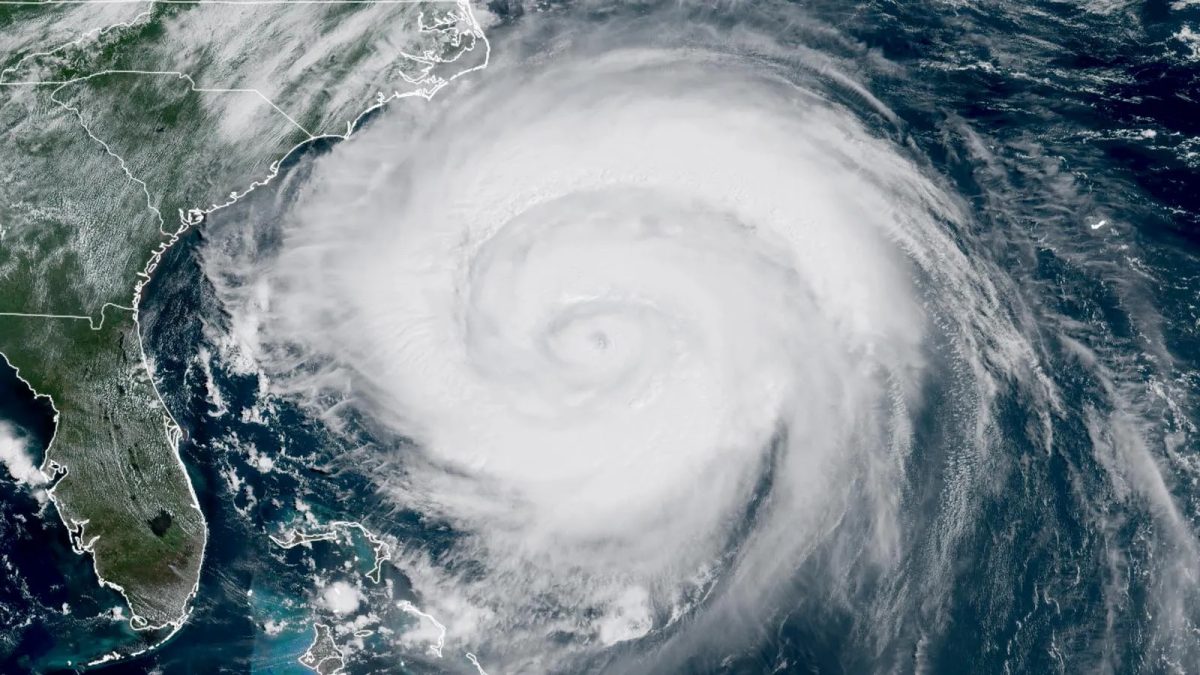
All of this comes after two storms hit the town in August and October, leaving it unclear how the city will get their beaches ready for next summer – and in the years to come.
What makes North Wildwood unique
Along the Jersey Shore, dozens of barrier islands shield the mainland from damaging waves and storm surges. These islands are also home to coastal communities and popular tourist destinations.
Maintaining beaches along the Jersey Shore is a massive and expensive undertaking.
New Jersey has spent more than $3 billion dollars replenishing sand along its beaches since the mid-1930s.

The city of North Wildwood, at the top most point of the island, has been going through a decade’s long struggle of maintaining its beaches.
In 1986, North Wildwood boasted a 1,500-foot wide beach with a very prosperous and effective dune system.
Beach goers and tourists had to make quite the journey to make it to the water’s edge.
By 2006, North Wildwood saw a 1,150 ft shoreline retreat, the largest in New Jersey.
According to the New Jersey Office of Emergency Management, there are many causes for coastal erosion including the shape of the shore and features of the seafloor like sandbars, the orientation of the shoreline, and how these factors have responded to storm frequency and rising sea levels.
Sand naturally flows south, meaning much of North Wildwood’s sand ends up in neighboring cities like Wildwood and Wildwood Crest, which are known for their wide beaches.
Many efforts have been made to prevent erosion and replenish the beaches over the years.
In 2009, the city of North Wildwood as well as the New Jersey Department of Environmental Protections Office of Climate and Energy (NJDEP OCE) replenished 450 feet of the shoreline.
By 2021, despite multiple projects to again renew the beaches through dredging of ocean sand and through donations of sand from other cities, the shoreline had ended up being reduced by 320 feet.
In June 2024, a major dredging project in conjunction with the New Jersey Department of Transportation (NJDOT), brought 800,000 cubic yards of sand from an offshore sandbar onto North Wildwood beaches.
“That project has held up pretty well, and we’ve gotten through two seasons with that,” said Patrick Rosenello, mayor of North Wildwood. “There has been some erosion in spots and a significant amount of sand has shifted to an area where it hadn’t been originally placed, but it was still beneficial. Overall, our beach has been in decent shape for the past two years.”
Another dredging project in June 2025 also in conjunction with the NJDOT pulled sand from the Hereford Inlet just north of North Wildwood in another attempt to replenish the beaches for the summer season and moving forward.
“The Hereford Inlet has proven to be one of the best and most sustainable sand sources in the state of New Jersey as for a dredge site, so everything really went to plan there,” said Long.
These smaller dredge projects are short term solutions, but North Wildwood is still looking for bigger ways to maintain its beaches for the long term.
-
Aerial imagery of North Wildwood’s beaches in 1987. (Courtesy of Kyle Rutherford, Deputy City Administrator for the city of North Wildwood.)

-
Aerial imagery of the northernmost part of the city of North Wildwood in 2021. (Courtesy of Kyle Rutherford, Deputy City Administrator for the city of North Wildwood.)

-
Aerial imagery of the northernmost point of the city of North Wildwood’s beaches in 2025 after significant restoration projects. Courtesy of Kyle Rutherford, Deputy City Administrator for the city of North Wildwood.)


Trying to get the Wildwoods to work together
For more than a decade, that long term plan has been the Five Mile Island project.
The plan calls for five miles of protection, including 16 foot high dunes in North Wildwood built from the sand from the neighboring towns to the south.
But Wildwood Mayor Ernie Troiano and Wildwood Crest Mayor Don Cabrera have recently opposed the project. They fear the loss of their town’s beaches, losing out on space for beach goers and events, as well as economic loss.
“The current proposal, as presented, offers no sustainable long-term solution to the erosion issues affecting North Wildwood,” said Mayor Cabrera. “In fact, for Wildwood Crest, it appears more like excavation than replenishment.”
As a result, the state said the project has been cancelled and the funding will be diverted.
North Wildwood has a history of conflict with the state’s Department of Environmental Protection (DEP) – including a series of lawsuits over its beach replenishment authority. North Wildwood Mayor Rosenello blames the DEP for the collapse of the Five Mile Island project.
“We were in line for a much larger federally sponsored beach project that because of some issues with the DEP and the towns to our south, the funding for that project is now being threatened,” said Rosenello.
Days after the state cancelled the Five Mile Island project, the city of North Wildwood sued the DEP again.
Meanwhile, there are also threats of federal funding cuts for beach replenishment projects across the state.
For the first time since 1986 the federal budget does not include money for these efforts.
New Jersey Republican Congressman Jeff Van Drew, who represents the Wildwoods, said he has met with many Jersey Shore town mayors as well as officials from the U.S. Army Corps of Engineers and the DEP to discuss short and long term solutions. And he is hopeful that funding will eventually come.
“Some people have been told that federal dollars for beach replenishment were taken back or cancelled, and that is simply not true,” said Van Drew. “We have delivered record levels of funding for our shore, and I expect that success to continue.”
In the meantime, North Wildwood is continuing with other measures in the hopes that it will stem the erosion.
The final approvals for a new extension of the North Wildwood seawall are in place, extending the protective wall from 2nd avenue, down to 7th avenue. Construction of the seawall extension is expected to begin in 2026.